
Inguinal + Femoral Hernias
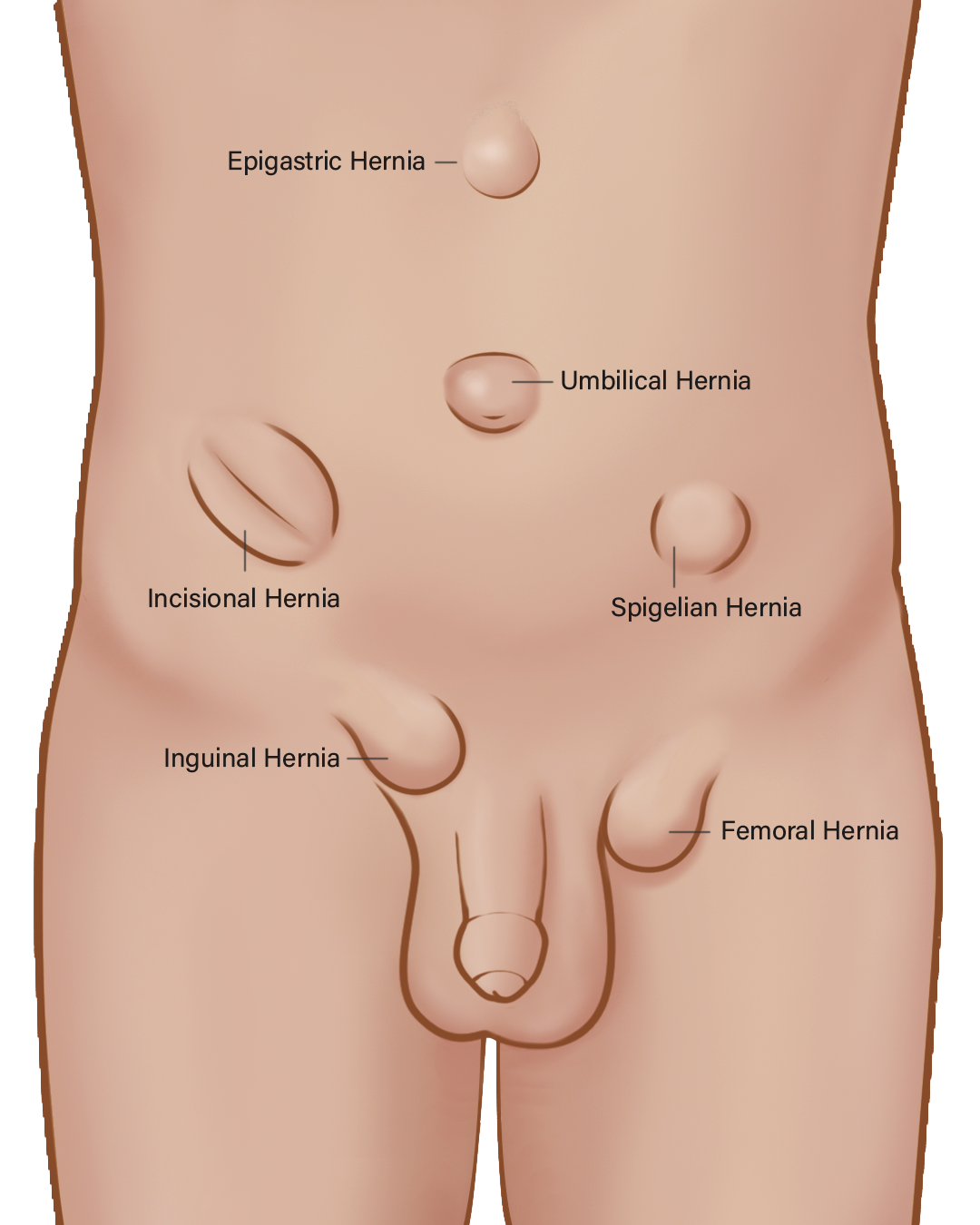
What is an inguinal hernia?
A hernia is defined as a weakness in the abdominal wall in which organs or fat may pop through.
An inguinal hernia is when this occurs in the groin. The groin and pelvis are complex structures in which many vessels and organs pass through, and each of these openings can expand over time and form a hernia.
Inguinal hernias make up 75% of all hernias, and the lifetime risk of these occurring is 27% in men and 3% in women.
Femoral hernias
Femoral hernias are also classified as groin hernias, however, they protrude through a different hernia defect. These are repaired basically the same way as inguinal hernias and have similar symptoms, although they more commonly occur in females.
What causes an inguinal hernia?
Most groin hernias result from ruptures of the weakened tissue you were born with or because of “wear and tear.” Often, we do not know exactly why a person develops a hernia.
Some of the common risk factors of getting a hernia are believed to include:
Chronic cough
Chronic constipation
Careers or hobbies that require lifting heavy objects
Over time, given repeated stress in the area, the defects can open through the weakened tissues.


How do I know if I have a hernia?
You may notice a bulge in your groin that is soft and may be reducible. You may also have associated symptoms such as:
Groin pain or soreness
Groin bulging which may disappear when lying down
Discomfort while straining or lifting
Burning or gurgling sensation in the groin
When should I be concerned?
If you are having severe pain in your groin, redness, or signs of a bowel obstruction such as inability to have a bowel movement associated with nausea or vomiting, you may need surgical evaluation immediately, as the contents of the hernia may be stuck.
How is an inguinal hernia diagnosed?
The most common way inguinal hernias are diagnosed is on a physical exam during a visit with a physician. You may not even have any symptoms but may have an obvious bulge.
If you have symptoms which are classic of an inguinal hernia but no obvious bulge, you may need medical images to see it better such as a CT scan or ultrasound.
What are my options for repair?
Even though some smaller hernias without symptoms can be watched over time, most research shows that even small hernias progress over time, therefore repairing them early may be beneficial.
The 3 main reasons a hernia should be fixed electively are:
To improve or cure discomfort in the groin due to a hernia
To prevent progression of the hernia to a larger, more difficult to treat condition
To avoid the need for an emergency intervention and prevent risks of the intestines being trapped or ”choked” within the hernia
The goal in fixing an inguinal hernia is to reduce the hernia “sac”, or the lining of the belly which goes through the hernia defect, and then cover the opening to prevent fat or organs from going through the defect again. This can be fixed through an old-fashioned surgical incision over your groin (known as an open approach) or using minimally-invasive options–either laparoscopically or robotically–to create several small incisions around your belly button.


How does an open inguinal hernia repair work?
An incision is made over your groin and then the hernia is located and found. The hernia sac, or the lining of your belly which goes through the hernia defect, is reduced and the defect is made smaller but not completely closed, as blood vessels and other important structures go through the area. If needed, a mesh is placed and secured, closing off the hernia, and the incision is closed.
Open groin repairs are used for patients who want to avoid general anesthesia and/or prefer a repair without mesh. Our method of choice for open non-mesh groin repairs is the Shouldice method.
Open repairs with mesh are reserved for patients in any of the following situations:
Have very large hernias extending into scrotum
Have extensive history of abdominal surgery
On blood-thinning medications that cannot be interrupted
Have failed previous laparoscopic or robotic repairs
How does a laparoscopic or robotic hernia repair work?
Three incisions are made at the upper part of your belly and your belly is filled with carbon dioxide gas. This allows your surgeons to work with a wide viewing area. A small flap is created from the lining of your belly and the hernia is found and reduced. Then the area is covered with a mesh and secured into place. The flap is closed and the gas is sucked out.
Laparoscopic or robotic surgery are typically the preferred means of repair. The use of minimally-invasive techniques provides the benefits of reduction in pain, faster functional recovery, better cosmetic results, and faster return to work and exercise. Moreover, the laparoscopic and robotic approaches allow surgeons to easily identify and treat hernias on the other side, likely avoiding another surgery in the future.


Recovery after inguinal hernia repair
Many patients go home the same day. Your surgeon will confirm whether an overnight stay is needed based on your health, the repair, and the complexity of your case. Arrange for someone to drive you home after anesthesia.
Pain, soreness, swelling, and occasional twinges can occur during recovery. The amount and duration vary. Follow your discharge instructions and contact your surgical team if symptoms persist or worsen.
Pain management and support
Your team will provide an individualized pain-management plan. Acetaminophen (Tylenol) and ibuprofen (Advil or Motrin) may be used when appropriate for your health and other medications. Follow the doses and schedule in your discharge instructions. Our approach emphasizes nonopioid options when appropriate; some patients may need additional medication.
Ice packs and, for some men with larger hernias, scrotal support or supportive briefs may help with comfort. Follow your surgeon’s instructions for their use.
Returning to daily activities
Resume walking and everyday movement gradually, as directed. Stop and rest if an activity causes groin pain.
Your surgeon will advise when to return to work. Desk work, heavy lifting, and physically demanding jobs may require different plans.
Discuss jogging, strenuous exercise, squats, tennis, golf, soccer, yoga, and Pilates with your surgeon before resuming them. Restrictions depend on the repair and your progress.
Do not drive while taking opioid pain medication or while pain or limited movement affects your ability to drive safely. Confirm timing with your team.
Discuss flying and other travel before surgery so your team can plan around your recovery and follow-up needs.
Follow-up
Attend follow-up as directed. Your surgeon will decide whether an in-person or other follow-up visit is appropriate and when to advance your activity. Healing continues beyond the point when you feel better; complex or recurrent repairs may need a longer recovery.
If activity brings back discomfort, reduce the activity and contact your team if the pain persists or worsens. Your surgeon’s specific instructions take priority over general information on this page.
Possible complications and when to seek help
Possible complications include fluid collections (seromas), wound infection or separation, abscess, bleeding, persistent pain, and hernia recurrence. Your surgeon will discuss your individual risks.
A seroma can feel like a lump where the hernia used to be, particularly after a larger repair. Some resolve without treatment, but your team should assess a new or concerning swelling. Some bruising around the incisions or groin can occur after surgery.
When to call your surgical team
Follow the contact instructions in your discharge paperwork. Call for:
Fever of 100.4°F or higher, or fever as defined in your discharge instructions.
Increasing redness, wound opening, or drainage from an incision.
Bleeding that does not stop with pressure as instructed.
Persistent nausea or vomiting.
Difficulty or inability to urinate after surgery.
Severe or increasing abdominal pain, including pain not relieved by prescribed medication.
Extensive or increasing bruising, swelling, or discoloration.
Symptoms that are getting worse rather than improving, or any concern about your recovery.
When to seek emergency care
Call 911 for chest pain, fainting, shortness of breath or difficulty breathing, trouble speaking, new weakness, or sudden vision changes. Notify your surgeon after emergency care has been arranged.


Next Steps
Our team offers open, laparoscopic, robotic, and selected mesh-free approaches to inguinal hernia repair. Your consultation is an opportunity to discuss your symptoms, goals, and the options suited to your case.
We focus on careful surgical technique, individualized pain management, and ongoing review of our outcomes. Our surgeons and office staff will guide you through preparation and recovery.
To schedule a consultation, call (212) 305-5947 or use our online appointment request form. Prefer to avoid mesh? Learn about mesh-free hernia repair and discuss whether it is appropriate for you.